
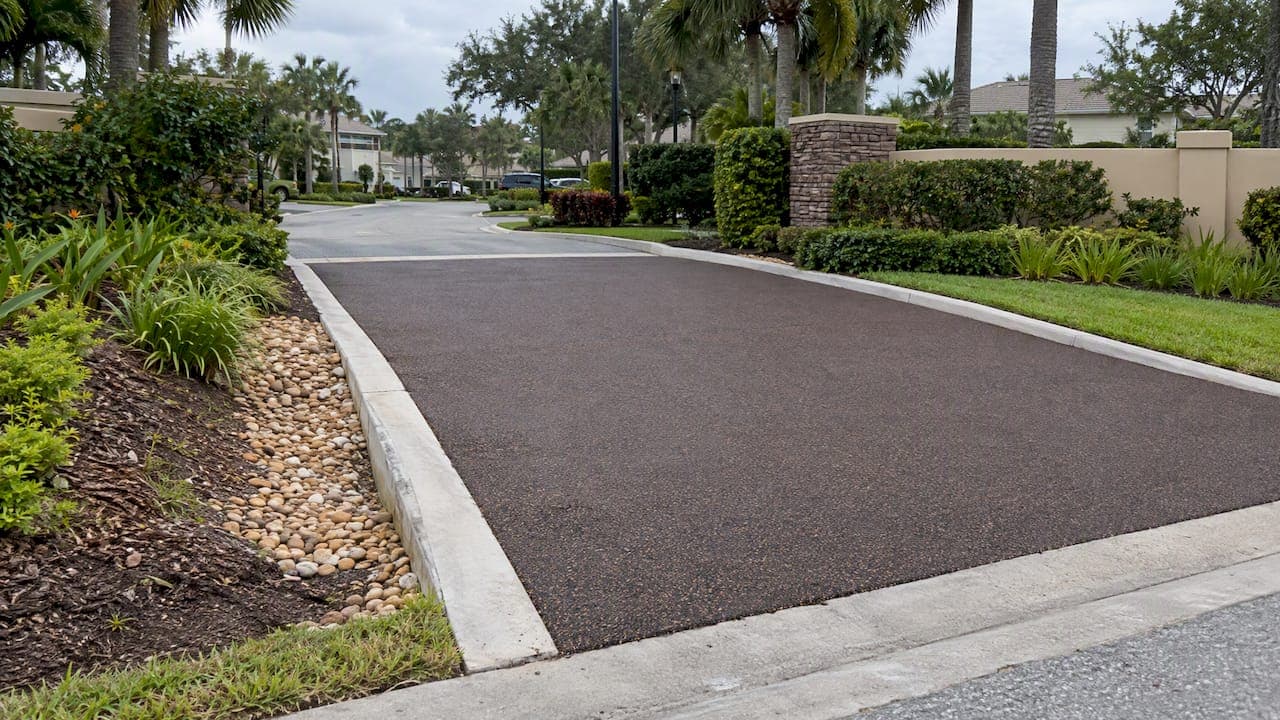
Colored recycled-rubber resurfacing, installed as a Rubberway® pervious system, gives driveways and community surfaces a durable, color-stable finish that drains instead of pools. It suits homeowners who want curb appeal without standing water, HOA boards managing shared pavement, and municipal buyers who need documented stormwater performance. The right fit depends on your base condition, climate, and color goals.
TL;DR:
- The durability and color stability of a Rubberway® system mainly depend on specifying aliphatic binders, which resist UV breakdown and yellowing longer than aromatic options.
- Rubber surfaces offer high permeability, with tested tensile strength retention above 68 percent after environmental cycling, supporting long-term durability.
- Proper site preparation, layer thickness, and binder choice significantly influence the project's lifespan and cost, with thicker layers and aliphatic binders providing better value over time.
- Routine maintenance involves debris removal and prompt stain treatment, with lifespan heavily affected by installation quality and binder type.
- EcoTec Rubber Paving installs Rubberway® systems exclusively, focusing on ADA compliance and stormwater performance, with a recommended site evaluation to determine if resurfacing or reconstruction is appropriate.
Table of Contents
- What colored rubber driveway resurfacing actually means
- Drainage, durability, safety, and environmental benefits
- Binder chemistry and color: what determines a stable finish
- Installation process and timeline from prep to cure
- Performance you can expect: permeability, strength, and climate resilience
- What drives cost and how to compare contractor bids
- Maintenance needs and realistic lifespan expectations
- Choosing a contractor and specs to put in your contract
- When EcoTec recommends colored Rubberway® resurfacing
- Request a Rubberway® estimate from EcoTec Rubber Paving
- Primary research and standards cited in this article
- Sources
- FAQ
What colored rubber driveway resurfacing actually means
This guide covers one specific category: colored recycled-rubber pavement installed as a Rubberway® pervious system. It is not colored concrete, stamped concrete, or tinted asphalt sealers, and the installation methods, binders, and performance data below do not apply to those products.
A Rubberway® pervious surface is built from ground recycled tire rubber bound together with a polymer binder, leaving open air voids throughout the layer instead of a solid slab. Water moves through those voids into a prepared stone base rather than running off the surface, which is why the system is classified as pervious rather than impervious pavement. The result looks and feels like a cushioned, colorful driveway while functioning as part of a site's stormwater management plan.
Drainage, durability, safety, and environmental benefits
Pervious rubber surfaces solve problems that solid pavement cannot. Water infiltrates through the surface rather than sheeting toward storm drains or pooling in low spots, which matters for both homeowners tired of puddles and municipalities tracking runoff compliance. For technical detail on how permeable systems fit into drainage design, EcoTec's stormwater management guidance covers the engineering side.
Polyurethane-bound porous rubber pavements demonstrate high permeability with significant air void volume, supporting strong stormwater infiltration while retaining tensile performance after environmental cycling.
- Rubber's flexibility resists cracking from freeze-thaw cycles and heat expansion better than rigid pavement.
- A textured, cushioned surface reduces slip risk and smooths ADA-required transitions compared with some sealed or coated surfaces.
- Each installation reuses ground scrap tires that would otherwise go to landfill, giving the material a circular-economy role beyond paving performance.
Binder chemistry and color: what determines a stable finish
The binder holding the rubber particles together decides how long the color lasts. Aliphatic binders resist ultraviolet breakdown and yellowing far better than aromatic binders, which is why research comparing the two chemistries favors aliphatic formulations wherever long-term color stability matters. Aromatic binders cost less upfront but tend to amber and fade faster, which defeats the purpose of a custom color driveway. EcoTec's primer on binder types breaks down the chemistry further for buyers writing specifications.
Rubber particle size is the other variable worth understanding before you choose a color system:
- Fine crumb rubber generally improves ductility with less loss of compressive strength than coarse rubber.
- Coarse rubber can add resilience but may reduce surface smoothness and complicate color consistency.
- Pigment load and binder clarity together determine whether a color reads as vivid or muted once cured.
Pro Tip: Ask any contractor whether your bid specifies aliphatic or aromatic binder, in writing, since "colorfast" claims mean little without that detail.
Installation process and timeline from prep to cure
A Rubberway® colored resurfacing project follows a predictable sequence, though timelines shift based on existing site conditions.
- Site evaluation and prep. The crew assesses the existing base, grading, and drainage path, removing failed material and correcting slope where needed.
- Base and drainage layer. A compacted stone base is set to allow water through to subgrade or a drainage outlet.
- Rubber surface layer. The colored rubber-binder mix is applied at a specified thickness, typically in the range used for driveway overlays.
- Cure and inspection. The surface cures before opening to vehicle traffic, with cure time depending on binder chemistry and weather.
Large existing cracks, a failed base, or poor grading usually expand the scope of work beyond a simple overlay. Homeowners dealing with chronic puddling before resurfacing can find troubleshooting steps in EcoTec's guide to fixing driveway puddles, and Florida-specific overlay thickness guidance appears in the concrete driveway resurfacing walkthrough.
Performance you can expect: permeability, strength, and climate resilience
Buyers comparing bids should ask for numbers, not adjectives. Published testing on polyurethane-bound porous rubber reports structural modulus ranging from 28 MPa to 59 MPa, with tensile strength retention above 68% after environmental cycling, which supports claims of long-term durability under normal driveway loads.

Separate research on rubber-modified porous mixes found improved ductility and freeze-thaw resistance, though often with some reduction in compressive strength depending on rubber content, a trade-off worth discussing with your installer if the surface will carry heavy or frequent vehicle loads. Fine crumb rubber tends to limit that strength loss better than coarse rubber. None of this makes a Rubberway® system a substitute for structural reconstruction where the base itself has failed: resurfacing restores the wearing course, not a collapsed subgrade.
What drives cost and how to compare contractor bids
Price swings on these projects come down to a handful of variables, and understanding them helps you read a bid instead of just the total.
- Square footage and existing site prep, including demolition of a failed slab or asphalt.
- Binder choice, since aliphatic formulations for color stability typically cost more than aromatic options.
- Custom color and pigment density, plus the specified thickness of the rubber layer.
- Site access and grading corrections, which add labor time on tight lots or sloped driveways.
A lower upfront bid that skips binder specification or uses thinner layers often costs more over the surface's lifespan through earlier fading or wear. Ask contractors for an itemized bid listing binder type, thickness, and porosity target, plus a contingency line for unexpected base repairs.
Maintenance needs and realistic lifespan expectations
Routine upkeep is light compared with sealed pavement, but it is not zero.
- Rinse or sweep debris periodically to keep surface pores from clogging and preserve drainage performance.
- Address oil stains promptly using absorb-and-rinse methods rather than harsh solvents that can degrade binder; homeowner guidance on removing driveway oil covers the safer approach.
- Avoid heavy point loads or sharp equipment that can tear the surface layer before the binder fully cures.
- Watch for localized depressions or color patchiness, both early signs that a section may need spot repair rather than full resurfacing.
Expected lifespan depends heavily on binder choice and installation quality, with aliphatic-bound, properly compacted systems generally outlasting aromatic or poorly prepped installs.
Choosing a contractor and specs to put in your contract
A strong bid protects you long before the first truck arrives. Use this sequence when vetting proposals.
- Confirm the contractor is licensed and insured, with Rubberway® product training or equivalent hands-on experience.
- Require the bid to state binder chemistry (aliphatic if color stability matters), target porosity, and layer thickness in writing.
- Ask for references from similar projects, residential or municipal, depending on your scope.
- Request documentation suitable for stormwater credit applications if you are an HOA or municipal buyer.
- Have the base substrate professionally cleaned and assessed before bidding; a commercial driveway cleaning walkthrough outlines what thorough prep looks like.
Pro Tip: Treat a bid that omits binder type or porosity target as incomplete, not just vague, since those two line items determine most of the surface's long-term performance.
When EcoTec recommends colored Rubberway® resurfacing
We generally recommend Rubberway® colored resurfacing for stormwater-priority sites, community spaces that want a cohesive color scheme, and ADA pathway upgrades. When a base has already failed structurally, reconstruction, not resurfacing, is the honest answer. A site evaluation tells you which situation you are in.
— Roger
Request a Rubberway® estimate from EcoTec Rubber Paving
Rubberway® systems are installed exclusively as a dedicated material rather than alongside concrete or asphalt offerings. Installations focus on ADA compliance and drainage and heat demands relevant to Florida.
Requesting an estimate typically includes a site visit, a written specification covering binder and thickness, and a realistic timeline before you sign anything. Browse Rubberway® product options or start a project with EcoTec Rubber Paving.
Primary research and standards cited in this article
- ASTM D6114/D6114M, asphalt-rubber binder specification
- Water (MDPI), polyurethane-bound porous rubber pavements
- MDPI research on aliphatic vs aromatic binder performance
Sources
- Water (MDPI) article — polyurethane-bound porous rubber pavements (2023-2024)
- MDPI research on binder selection (aliphatic vs aromatic) — 2023–2024
- ASTM D6114/D6114M — Standard Specification for Asphalt-Rubber Binder
FAQ
What is colored rubber driveway resurfacing made of?
It is a pervious pavement made from ground recycled tire rubber bound with a polymer binder, installed as a Rubberway® system over a prepared stone base. Water passes through the surface's open voids rather than running off, which is the core difference from solid pavement.
How long does a colored rubber driveway resurfacing last?
Lifespan depends heavily on binder chemistry and installation quality, with aliphatic-bound systems generally holding color and structure longer than aromatic-bound ones. Routine maintenance like clearing debris and prompt stain removal also extends service life.
Is colored rubber resurfacing strong enough for driveways?
Testing on polyurethane-bound porous rubber reports structural modulus between 28 MPa and 59 MPa with strong tensile retention after weathering, which supports normal vehicle loads. It is not a fix for a driveway whose base has already failed structurally.
Why does binder choice matter for color?
Aliphatic binders resist ultraviolet fading far better than aromatic binders, which tend to amber over time according to comparative binder research. Specifying binder type in your contract is the single most effective way to protect a custom color investment.
Does EcoTec Rubber Paving install colored Rubberway® driveways?
Yes, EcoTec Rubber Paving specializes exclusively in Rubberway® rubber paving systems, including colored, ADA-compliant driveway resurfacing. The company is licensed and insured and offers a range of Rubberway® product lines and color options.