
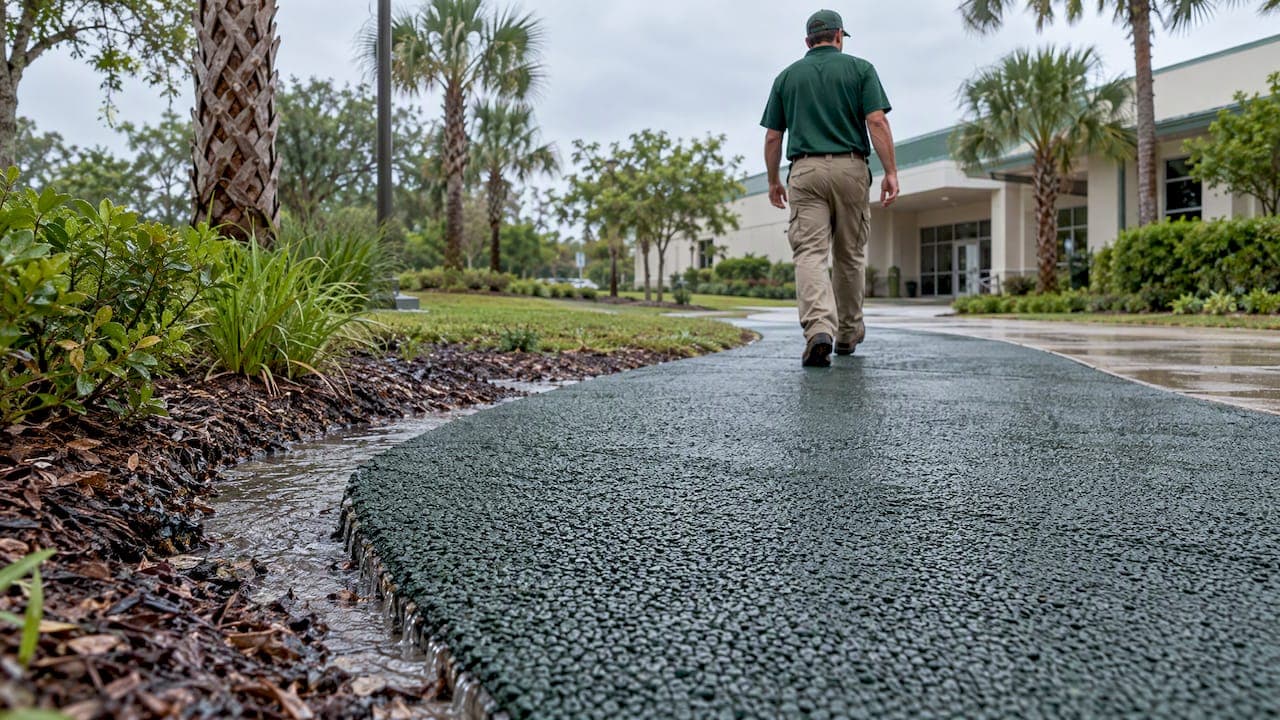
Permeable pavements and recycled-material surfaces lead the field of eco-friendly sidewalk options, but the material you pick matters less than the base design and maintenance plan behind it. Pervious concrete, porous asphalt, permeable interlocking concrete pavement (PICP), and recycled rubber all perform well when built right. Before choosing anything, check your site's drainage, soil, and expected foot or vehicle loads.
TL;DR:
- Permeable pavement costs range from $1.50 to $14 per square foot, with higher upfront prices often offset by long-term savings on stormwater infrastructure.
- Proper base design, including reservoir layers and underdrains, is crucial for drainage, load-bearing capacity, and longevity of permeable sidewalks.
- Regular maintenance like vacuum sweeping and sediment control significantly prolongs the permeability and performance of permeable surfaces.
- Cold climates require careful drainage planning to prevent freeze-thaw damage and surface cracking in permeable systems.
- Local regulations and incentives, such as stormwater fee credits and green building certifications, can influence the choice and design of eco-friendly sidewalks.
Table of Contents
- Types of eco-friendly sidewalk materials and their trade-offs
- When is a permeable sidewalk the right call?
- What permeable sidewalks cost over their lifespan
- Getting the base and drainage design right
- Keeping a permeable sidewalk working for decades
- Where rubber paving fits as a low-waste alternative
- Finding eco-friendly sidewalk materials near you
- What successful eco-friendly sidewalk projects look like
- Regulations and incentives worth checking before you build
- A practical next step for owners and contractors
- EcoTec Rubber Paving's approach to sustainable sidewalks
- FAQ
- Sources
Types of eco-friendly sidewalk materials and their trade-offs
Each material handles water, weight, and weather differently, so the right pick depends on what the sidewalk needs to survive.
- PICP (permeable interlocking concrete pavers): individual units set over a gravel base with gaps that let water pass through, good for walkways, plazas, and low-speed access roads.
- Pervious concrete: a no-fines concrete mix with 15 to 25% void content, suited to sidewalks and parking areas where sustained infiltration matters.
- Porous asphalt: standard-looking asphalt with an open-graded surface course, often the lowest-cost permeable option for trails and access paths.
- Recycled rubber paving: made from shredded waste tires bound into a porous mat, offering flexibility and traction with good drainage in warm, retrofit-heavy settings.
- Recycled-plastic grids: open lattice panels that hold turf or gravel infill in place, useful for overflow parking and low-traffic paths that still need to look green.
- Crushed recycled glass and low-cement mixes: glass aggregate replaces some virgin stone, while low-cement or timbercrete-style blends cut embodied carbon, though both require careful mix design to match standard strength.
Permeable pavement types let rainwater infiltrate into the subsoil, cutting runoff volume and helping recharge groundwater, which is the core reason this whole category counts as sustainable. A closer look at the types of permeable paving and their costs helps when comparing options side by side.
When is a permeable sidewalk the right call?
Permeable pavement is not a universal fix. It shines in some situations and causes headaches in others.
- Good fit: sites needing stormwater control under pedestrian or light vehicular loads, like residential sidewalks, park paths, and HOA walkways.
- Poor fit: stormwater hot spots with contaminated runoff, heavy truck routes, or industrial yards where sediment loads are constant.
- Clogging risk: sediment from adjacent lawns or unpaved shoulders can seal the surface over time, so edge control matters as much as the pavement itself.
- Freeze-thaw exposure: in cold climates, water trapped in the base can expand and crack the surface if drainage is undersized.
- ADA considerations: avoid loose paver joints wider than standard wheelchair caster gaps in crosswalks, and keep transitions between surfaces flush and smooth.
Most of these downsides trace back to design choices rather than the material itself, which is why the next sections focus on base layers and upkeep.
What permeable sidewalks cost over their lifespan
Upfront price is only part of the story. Construction costs for permeable systems run $1 to $1.50 per square foot for porous asphalt, $3 to $9 for pervious concrete, and $7 to $14 for PICP, with PICP costing more because of the unit pavers and bedding work. That spread matters less once you count what the pavement saves downstream.

Permeable systems can avoid the cost of separate stormwater infrastructure like catch basins and detention ponds, and life-cycle comparisons often show them competitive with conventional pavement once those savings are included. Many municipalities also offer stormwater utility fee credits tied to permeable surfaces, and projects can earn points toward green building certifications like LEED. Those incentives can offset the higher PICP or pervious concrete price within a few years for property owners managing runoff fees.
Getting the base and drainage design right
The surface material gets the attention, but the base layer underneath decides whether the sidewalk drains, holds weight, and lasts.
- Reservoir base: a layer of open-graded crushed stone, typically 6 to 18 inches deep, stores water temporarily while it infiltrates or drains away.
- Underdrains: perforated pipes near the base of the reservoir layer move water to an outlet when native soil infiltrates too slowly on its own.
- Geotextile fabric: separates the base aggregate from native soil to stop fines from migrating up and clogging the storage layer.
- Edge restraints: concrete curbs or aluminum edging keep PICP units and base aggregate from spreading under load.
Soil type drives most of these decisions. Clay-heavy or expansive soils often need underdrains and a thicker base, while sandy, well-draining soil may need little more than the reservoir layer itself. FHWA's technical guidance on permeable concrete ties long-term performance directly to base design, underdrain placement, and construction quality, not just the surface mix. A full installation checklist for sustainable paving is worth reviewing before any permeable project breaks ground.
Pro Tip: Have a geotechnical test done before finalizing base depth. A soil that infiltrates slower than expected can turn a thin base into a standing-water problem after the first hard rain.
Keeping a permeable sidewalk working for decades
Permeable surfaces fail slowly and quietly, usually through clogging rather than structural collapse, which makes routine care the cheapest insurance you can buy.
- Vacuum sweeping: sediment buildup is the most common cause of lost permeability, and periodic sweeping keeps pores open.
- First-year monitoring: watch how the surface drains after rain in the months right after installation to catch design flaws early.
- Debris and sediment control: keep adjacent mulch, soil, and lawn clippings from washing onto the surface.
- Joint refill: PICP joints lose aggregate over time and need periodic top-offs to keep the surface stable and permeable.
- Winter plowing: use wide plow blades and avoid back-blading, since aggressive plowing is a common cause of surface damage on permeable systems in snowy regions.
Municipal maintenance programs for pervious paver installations often schedule vacuum sweeping several times a year to prevent the gradual performance loss that untreated sediment causes.
Where rubber paving fits as a low-waste alternative
Recycled rubber paving, built from shredded waste tires, offers another route to a permeable, low-waste sidewalk. One recycled rubber paving system uses this approach to deliver a porous surface with good drainage, crack resistance in heat, and ADA-compliant finishes. It suits retrofit projects, heat-prone climates, and low-slope sidewalks where standing water and sun damage are recurring problems. Property owners juggling cracked, heat-stressed concrete walkways often find rubber paving a practical substitute rather than a like-for-like replacement for every permeable option.
Finding eco-friendly sidewalk materials near you
Availability varies more than most buyers expect. Pervious concrete and porous asphalt use the same ready-mix plants and asphalt suppliers as conventional paving, just with different mix specs, so most regions have local access without special ordering. PICP units ship from a smaller number of manufacturers, and lead times stretch during peak construction season, so ordering early matters more than it does for poured materials.
Recycled content availability depends on regional supply chains for crushed glass, reclaimed asphalt, and processed rubber. Areas with active tire recycling programs or construction demolition recovery facilities tend to have better access to recycled aggregate and rubber paving materials at lower transport cost. Low-cement and timbercrete-style mixes are less common and often require a specialty supplier or a contractor who already works with recycled-aggregate paving systems.
Before committing to a material, it helps to call two or three local suppliers and ask directly about lead times and minimum order quantities. A material that looks ideal on paper can add weeks to a project timeline if it has to ship from out of state. Contractors who regularly install permeable systems usually know which products move fastest in a given region, and that familiarity often shortens both the bidding and construction phases.

What successful eco-friendly sidewalk projects look like
Municipal and park projects offer the clearest examples of how permeable sidewalks perform once installed. Documented pervious paver projects, including the Westmoreland installation referenced in EPA case materials, show that performance holds up well when scheduled vacuum sweeping and monitoring are built into the maintenance plan from day one rather than added after problems appear.
The pattern across these projects is consistent: the sidewalks that stay permeable for years are the ones where the owner or municipality treated maintenance as part of the design, not an afterthought. Parks and trail systems that pair permeable surfacing with adjacent landscaping tend to fare better too, since controlling sediment runoff from nearby soil or turf reduces the clogging that shortens a pavement's working life. HOA and community walkway projects that start with a clear base design and underdrain plan, rather than retrofitting one after drainage issues show up, consistently need fewer repairs in the first five years.
Regulations and incentives worth checking before you build
Local stormwater ordinances increasingly favor permeable pavement, and many jurisdictions tie reduced stormwater utility fees directly to documented use of permeable surfaces. Some municipalities also require permeable or low-impact paving for new commercial and municipal projects above a certain size, so checking local code before design starts can save a redesign later.
Green building programs add another layer of incentive. Projects pursuing LEED certification can earn credit for permeable pavement and for using recycled aggregates or low-carbon concrete mixes, both recognized strategies in USGBC's guidance on reducing embodied carbon in concrete. ADA compliance is a regulatory requirement rather than an incentive, and it shapes material choice directly: joint widths, surface evenness, and transition slopes all need to meet accessibility standards regardless of which eco-friendly material you choose. Reviewing how local ordinances shape paving choices before finalizing a design avoids costly changes mid-project.
A practical next step for owners and contractors
Match the material to your site, not the trend. If infiltration is slow or loads are heavy, lean toward PICP or pervious concrete with engineered underdrains; if the surface needs flexibility and heat resistance, rubber paving deserves a look. Hire a specialty installer when the base design involves underdrains, expansive soil, or ADA documentation. Document the base design and maintenance plan before anyone breaks ground.
— Roger
EcoTec Rubber Paving's approach to sustainable sidewalks
One company installs a rubber paving system for homeowners, municipalities, and HOAs who want a durable, low-waste sidewalk surface without redesigning drainage from scratch. The system uses recycled tire material in a porous mat that handles heat, resists cracking, and meets ADA compliance standards out of the installation. It can be a strong fit when a project needs government-ready documentation, a warranty, or a base design handled by a specialist rather than pieced together.
If your sidewalk project involves complex drainage requirements or ADA documentation, reach out through our site for a project consultation, or review Rubberway® product specs to see which system fits your climate and load needs.
FAQ
What are environmentally friendly building materials?
Environmentally friendly building materials reduce resource use, embodied carbon, or waste compared to conventional options, and include recycled aggregates, low-carbon concrete mixes, and permeable pavements that manage stormwater on site. For sidewalks specifically, that means pervious concrete, porous asphalt, PICP, and recycled rubber or plastic surfaces. The USGBC's guidance on low-carbon concrete recommends recycled aggregates and supplementary cementitious materials as a way to cut a project's carbon footprint.
What are the downsides of permeable pavers?
Permeable pavers can clog with sediment over time if nearby soil or turf washes onto the surface, which reduces infiltration unless the pavement gets regular vacuum sweeping. They also tend to cost more upfront than standard pavers, particularly PICP, and can be damaged by aggressive snowplowing in cold climates. FHWA's technical guidance notes that most failures trace back to base design or maintenance gaps rather than the paver material itself.
What is the cheapest material for a walkway?
Among permeable options, porous asphalt tends to be the least expensive to install, with construction costs running $1 to $1.50 per square foot compared to higher ranges for pervious concrete and PICP. Actual pricing depends on base depth, local labor rates, and site conditions, so a quote from a local contractor gives the most accurate number for a specific project.
What are 5 examples of sustainability in paving?
Five common sustainable paving approaches include permeable interlocking concrete pavers, pervious concrete, porous asphalt, recycled rubber paving, and recycled-plastic grid systems filled with turf or gravel. Each reduces stormwater runoff, reuses waste material, or lowers embodied carbon compared to standard impervious paving. The right choice depends on site drainage, expected loads, and local climate.
Sources
- Soak up the Rain: Permeable Pavement — U.S. EPA
- TechBrief: Permeable Concrete Pavements — FHWA
- Low Carbon Concrete — U.S. Green Building Council