
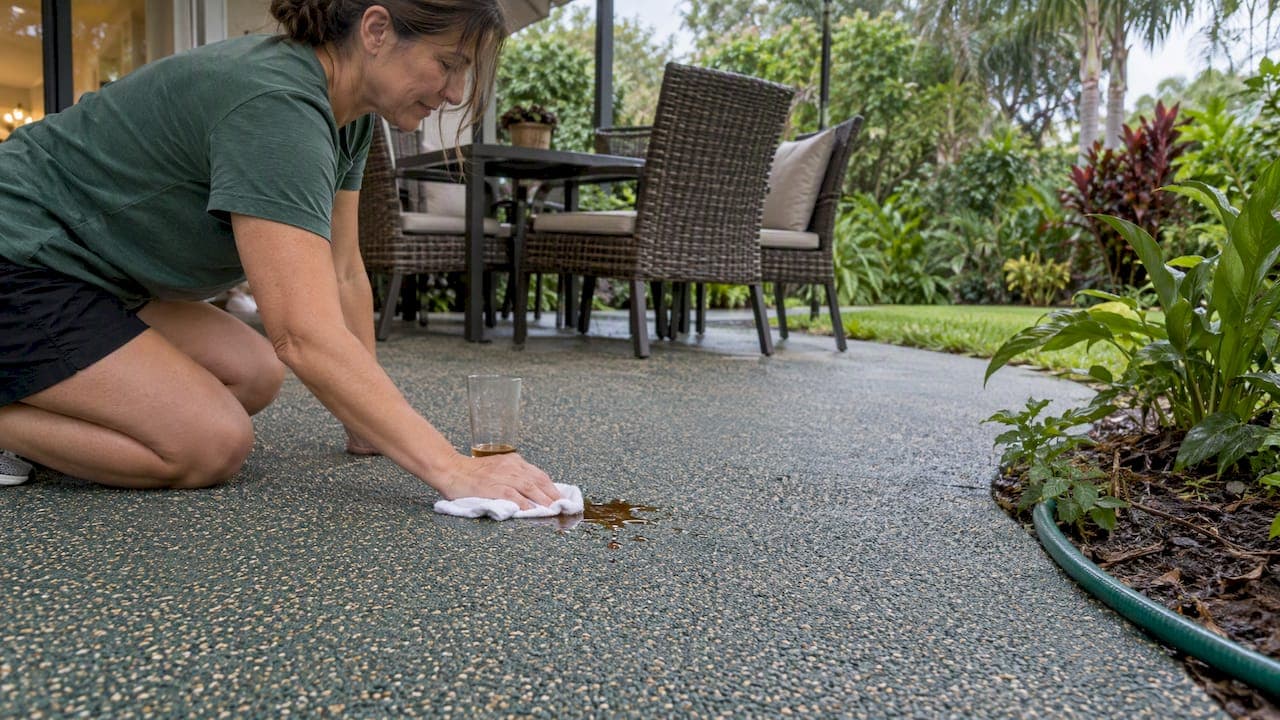
Porcelain pavers and dense sealed concrete remain the top general-purpose picks for a stain resistant patio surface, thanks to very low water absorption and tight surface structure. If standing water and drainage are your real problem, a porous rubber system is a strong alternative that prevents stains before they form. Start by matching the material to your site: check sun exposure, pool proximity, soil drainage, and joint type before you choose.
TL;DR:
- Porcelain pavers have water absorption below 0.5%, making them highly resistant to most stains, but grout joints can stain faster if not cleaned regularly.
- Sealed dense concrete and concrete overlays depend heavily on the integrity of their sealers, which typically need reapplication every one to three years.
- Permeable surfaces like rubber and pervious concrete effectively prevent stains by allowing water infiltration, reducing standing water and organic buildup.
- Proper maintenance, including prompt spill rinsing and regular sweeping, is more critical for stain prevention than relying solely on coatings or sealers.
- Rubber paving systems excel in shaded, damp, or poolside environments due to their drainage properties and resistance to algae, root pressure, and splash stains.
Table of Contents
- Best stain-resistant patio materials compared
- How stain resistance actually works: porosity, vitrification, and joints
- Maintenance and cleaning rules that actually prevent stains
- Why drainage and permeable surfaces cut stains down
- How to choose the right stain-resistant patio surface for your site
- Which surfaces handle oil, food, rust, mold, and plant debris best?
- How long stain-resistant coatings actually last
- Environmental tradeoffs behind stain-resistant patio choices
- Where recycled-rubber patios actually solve problems other surfaces can't
- Solving stains and drainage with Rubberway® rubber paving
- FAQ
- Sources
Best stain-resistant patio materials compared
Not every material resists stains the same way, and the differences matter once you factor in sun, pets, pools, and tree cover.
Porcelain (vitrified) pavers sit at the top of most comparisons because vitrification creates a dense, glass-like structure with water absorption below 0.5%, which leaves little room for liquids or oils to soak in. The tradeoff shows up in textured, slip-resistant finishes, where fine grooves can still trap dirt and organic debris over time, and in the grout joints between slabs, which stain faster than the tile itself.
Sealed dense concrete and concrete overlays can perform well, but only while the sealer is intact. Fresh sealant sheds grease and leaf tannins; once it wears thin, the porous concrete underneath absorbs them readily, and dense concrete and stone vary widely in stain resistance depending on finish and upkeep.
Concrete pavers and permeable paver systems depend heavily on joint material. Standard polymeric sand resists weed growth and erosion but can still discolor from heavy runoff, while open-graded joint fills built for drainage shed water instead of holding it against the paver edge.
Natural stone ranges from fairly dense granite to porous limestone or travertine, so sealing recommendations differ by stone type and should be confirmed before installation.
Recycled rubber patio surfaces, such as Rubberway® systems, use a porous structure that lets water pass through instead of pooling on the surface, which limits the standing-water staining that plagues flat concrete.
Composite and specialty outdoor ceramic tiles offer a lower-maintenance middle ground, with factory finishes that resist most household stains without sealing.
Quick fit by scenario:
- Poolside areas: porcelain or rubber, both shed splash water without staining.
- Shaded, damp yards: permeable rubber or pervious concrete to avoid algae and standing water.
- High-traffic patios: porcelain or sealed pavers for scuff resistance.
- Tight budgets: sealed concrete pavers with quality polymeric sand joints.
How stain resistance actually works: porosity, vitrification, and joints
Stain resistance comes down to how much liquid a surface lets in. Porcelain's water absorption rate under 0.5 percent means vitrification essentially seals the material at the molecular level, so oil, wine, or fertilizer sits on top long enough to wipe away instead of soaking in. Unglazed or raw-finish surfaces absorb more than glazed ones, since the glaze adds an extra barrier layer.
Texture complicates the picture. A slip-resistant textured finish, even on porcelain, creates tiny crevices where organic matter and grime can lodge, and even low-porosity materials like porcelain can stain in grout lines or deep texture if they aren't cleaned regularly.
Joints are usually the weak link. Polymeric sand needs correct saturation and a proper cure window to bond and resist staining; done wrong, it can haze or develop a residue instead of locking grains together. Open-jointed systems built for permeability trade some of that joint stability for drainage, which shifts the staining risk away from standing water and onto occasional sediment buildup in the gaps.
Maintenance and cleaning rules that actually prevent stains
Most stains come from debris or liquid sitting too long, so routine habits matter more than any single product.
- Sweep leaves, pollen, and organic debris weekly during high-drop seasons to stop tannin stains before they set.
- Rinse spills, especially oil, wine, or pet waste, as soon as you notice them rather than waiting for a cleaning day.
- Schedule a seasonal power wash for sealed concrete, pavers, or porcelain to lift ground-in grime the hose can't reach.
- Treat oil and grease with an oxygenated degreaser first; reserve acid-based cleaners for mineral or rust stains, and test on a hidden spot since acids can etch some stones.
- Reseal stone or porous concrete on the schedule your sealant manufacturer recommends, usually every one to three years depending on traffic and sun exposure.
The one hard exception: never seal a permeable surface. Sealing pervious concrete or porous rubber blocks infiltration and defeats the entire drainage system, which then causes the standing water and staining you installed it to avoid.
Polymeric sand joints need their own care. Manufacturer-specified saturation and dry-weather cure windows are what keep the sand from washing out or hazing; skipping that process is a common cause of residue and early joint failure.
Pro Tip: Keep a small bag of patio-safe oxygenated cleaner on hand and treat spills within the first hour. Fresh stains lift out far easier than ones that have had a week to set.

Call a professional for deep rust staining, oil that has penetrated porous concrete, or large-area restoration where DIY cleaning risks damaging the surface finish; diagnosing your patio's drainage issues first can help avoid costly tear out, as explained in Concrete Patio Drainage for Homeowners: Diagnose First, Avoid Tear Out - Action Fence and Deck.
Why drainage and permeable surfaces cut stains down
A surface that drains well simply never develops the standing puddles that cause most outdoor staining and algae growth in the first place.
Permeable pavement works by letting water pass through the surface into a reservoir layer below, which slows runoff and keeps water from pooling and discoloring the surface. That infiltration process is also why permeable systems are treated as a recognized stormwater practice, useful for patios and driveways where site conditions allow it.
Common permeable choices include:
- Pervious concrete, which needs careful aggregate gradation and compaction to stay durable and drain well.
- Permeable interlocking pavers, which rely on open joints for infiltration rather than tight polymeric sand.
- Porous rubber systems, which use a two-layer recycled rubber base and wear layer to provide rapid drainage and filtration while resisting cracking from tree roots.
All three need periodic maintenance to stay permeable. Vacuum sweeping and power washing clear clogged pores, and underdrains may be necessary on sites with poor native soil infiltration. Our stormwater management guide for engineers covers the structural layers beneath a typical permeable rubber installation in more detail.
How to choose the right stain-resistant patio surface for your site
Matching material to site conditions prevents most stain complaints before they start.
- Sun and shade: shaded, damp yards favor permeable or rubber surfaces that resist algae buildup.
- Pool adjacency: porcelain or rubber both shed chlorinated splash water without staining.
- Soil infiltration: heavy clay soils may need underdrains beneath any permeable system.
- Traffic and household: pets and kids point toward low-maintenance porcelain or rubber over raw natural stone.
- Budget and lifecycle cost: sealed concrete pavers cost less upfront but need more frequent resealing than porcelain or rubber.
When interviewing installers, ask for water absorption figures, slip resistance ratings, warranty terms, expected maintenance frequency, and a sample mockup before committing. Installation timelines vary by site prep and drainage work required, so get a written timeline alongside the quote. Local ordinances can also shape which surfaces are allowed; our guide to stormwater ordinances and paving choices walks through how regulations affect permeable installations.
Which surfaces handle oil, food, rust, mold, and plant debris best?
Different stains call for different material strengths, and no single surface wins across the board.
Oil and grease are best resisted by porcelain and rubber, both of which shed liquids before they soak in, while sealed concrete only resists oil while the sealer layer is intact. Food and wine spills behave similarly: low-absorption porcelain wipes clean, but porous natural stone can hold a stain if not sealed and treated quickly. Rust is a different challenge entirely, usually coming from metal furniture legs or irrigation fixtures, and it penetrates porous concrete and limestone faster than it affects dense porcelain or rubber. Mold and mildew tend to appear wherever moisture lingers, which makes drainage the deciding factor: permeable rubber and pervious concrete resist mold better than flat, sealed surfaces that trap water in low spots. Plant debris and tannin stains from leaves and berries affect every material over time, but surfaces with tight joints and low porosity, like porcelain, clean up faster than textured stone or raw concrete.
The practical takeaway: no surface is immune to every stain type, but porcelain and porous rubber consistently need less remedial cleaning across this whole stain list than untreated or sealed-only concrete.

How long stain-resistant coatings actually last
Sealers and coatings are not permanent, and knowing their real lifespan avoids surprise staining down the road. Concrete sealers typically need reapplication every one to three years depending on UV exposure, foot traffic, and the sealer type used, and skipping resealing is one of the most common reasons sealed concrete starts absorbing stains again. Natural stone sealers follow a similar cycle, though porous stones like limestone may need more frequent attention than dense granite.
Porcelain and porous rubber systems take a different approach since they rely on inherent material properties rather than a surface coating. Porcelain's vitrified structure does not wear off the way a sealer does, so its stain resistance holds steady for the life of the tile, barring physical damage. Rubber paving systems built with a colored EPDM wear layer maintain their drainage and filtration performance over time without the periodic resealing cycle that concrete and stone require. That difference in upkeep is worth weighing against upfront cost when comparing total lifecycle maintenance, a point covered in more depth in our long-term paving maintenance guide.
Environmental tradeoffs behind stain-resistant patio choices
Stain resistance and environmental impact are connected more than most homeowners realize. Sealed, non-permeable surfaces like traditional concrete direct all rainwater off-site as runoff, which carries fertilizer, oil residue, and sediment straight into storm drains rather than letting the ground filter it. Permeable systems flip that dynamic: infiltration through a reservoir base layer treats runoff on-site instead of pushing pollutants downstream, which is also part of why they resist the standing-water staining that non-permeable surfaces develop.
Material sourcing matters too. Recycled rubber paving repurposes tire material that would otherwise go to landfill, while quarried natural stone and manufactured porcelain both carry extraction and firing energy costs. None of these tradeoffs make one material universally "greener," but a porous system that reduces runoff pollution while also cutting your own stain maintenance offers a practical overlap between environmental and homeowner priorities. Our sustainable paving installation guide walks through subbase preparation choices that affect both drainage performance and long-term environmental impact.
Where recycled-rubber patios actually solve problems other surfaces can't
Conventional stain-resistance advice mostly assumes dry, sunny sites, but that is not every yard. Rubberway®-style porous rubber earns its place on pool decks with constant splash runoff, shaded lots where leaf litter piles up, and properties where mature tree roots crack rigid pavers. The real tradeoff is aesthetic range versus maintenance savings: rubber offers fewer traditional finishes than stone, but it skips the resealing cycle entirely. Have a qualified installer evaluate your drainage and root pressure before you commit to any rigid material.
— Roger
Solving stains and drainage with Rubberway® rubber paving
We install pervious rubber pavement for patios, pool decks, and walkways, focusing exclusively on rubber systems rather than splitting attention across materials.
Before requesting a quote, measure your patio area, note where water pools after rain, snap a few photos, and list your priorities, whether that's stain resistance, slip resistance, or both. Browse our Rubberway® product line, including Rubberway Rubberrock 6000 and Rubberway EVOLUTION, or reach out through our site to start a project conversation. If standing water around your pool is the main complaint, our rubber patio surface case overview shows how a porous install stops puddles at the source.
FAQ
What is the most durable patio material?
Dense porcelain pavers and recycled rubber paving both hold up well over time, with porcelain resisting wear through its vitrified, low-absorption structure and rubber resisting cracking from freeze-thaw and tree-root movement. The better choice depends on whether your site has drainage or root-pressure problems that favor a porous rubber system.
What is the lowest maintenance patio material?
Porcelain pavers and porous rubber systems both require less upkeep than sealed concrete or natural stone, since neither needs periodic resealing to stay stain resistant. Routine sweeping and occasional rinsing cover most of what either surface needs.
What is the best surface for an outdoor patio?
For most homeowners, dense porcelain pavers offer the strongest general-purpose balance of stain resistance and low upkeep, while a porous rubber system is the better fit for pool decks or shaded, drainage-challenged yards. The right answer depends on your site's sun exposure, drainage, and how the space gets used.
Is there anything better than polymeric sand?
Open-graded joint fills designed for permeability can outperform standard polymeric sand on drainage-focused installations, since they let water pass through rather than holding it at the paver edge. The tradeoff is less joint rigidity, so the right choice depends on whether your priority is drainage or a firmer, more stable joint.
Does sealing a patio always improve stain resistance?
Sealing helps porous materials like natural stone and standard concrete resist stains, but only while the sealer layer remains intact, and it needs reapplication every one to three years. Permeable surfaces are the exception: sealing them blocks drainage and should never be done.
Sources
- Frost-proof porcelain pavers: cold climates and stain resistance — Keope
- Stormwater Management for Homeowners Fact Sheet 3: Permeable Paving — Virginia Tech Extension
- TechBrief: Permeable Concrete Pavements — FHWA
- Rubberway rubber sidewalks technical documentation — Portland (appeal file)
- Paving slab materials comparison — Build Design Hub