
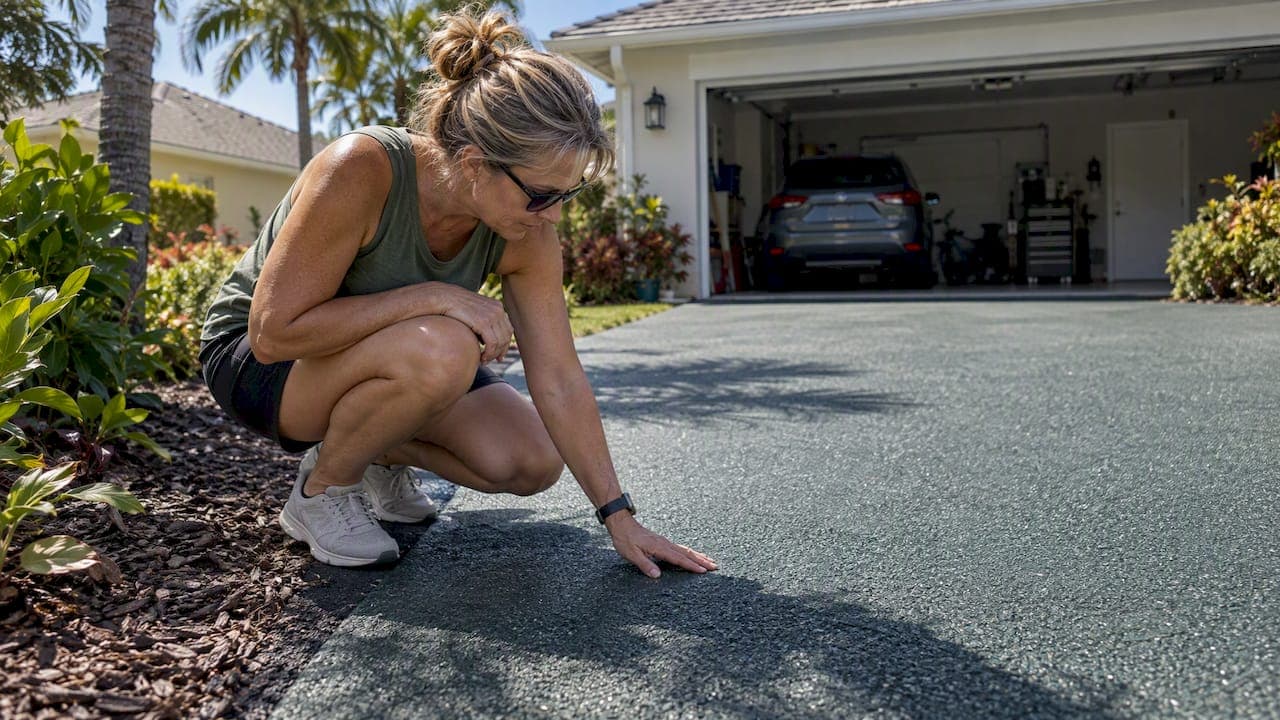
The best performers under intense sun are well-specified concrete, UV-stable resin surfaces with aliphatic topcoats, UV-stabilized concrete pavers, and engineered rubber paving. Whatever you pick, choose a lighter color, demand UV-stable binders, insist on hot-weather installation practices, and reseal or recoat on schedule. Those steps matter more than the brand on the bag.
TL;DR:
- A desert climate study recorded peak surface temperatures of 166°F for asphalt and 144°F for concrete, with sunlit pavement 36–56°F hotter than shaded surfaces.
- For asphalt, specify binders suited to local pavement temperatures and preservation seals; pavers need UV stable pigments and sealed joints, but allow localized repairs.
- Ask contractors for written accelerated weathering or fade test results; aliphatic resins resist UV color change better than aromatic resins, which yellow and degrade faster.
- Bids should schedule concrete pours during cooler hours, specify curing, match asphalt binders to site temperatures, tighten joints, and require a stable base and drainage.
- Inspect annually and after extreme heat, clean with pH neutral detergent before recoating, and repair small cracks promptly; use product data to set recoating intervals.
Table of Contents
- How does sun damage a driveway surface?
- Which driveway material handles sun and heat best?
- What coatings and sealers protect against UV?
- Which colors and finishes stay cooler and fade less?
- What should a hot-weather driveway bid include?
- How do I maintain a sun-exposed driveway?
- Why rubber paving makes sense for high-UV driveways
- Sun-ready rubber paving from our team
- FAQ
- Sources
How does sun damage a driveway surface?
Sun attacks a driveway through light and heat, while thermal cycling adds stress as the surface expands and contracts. Knowing how these effects work helps you question a contractor's claims.
- UV photo-oxidation breaks the molecular bonds in polymer binders, coatings and pigments. The result is fading, chalking and a dull, powdery surface.
- Heat accelerates aging. It speeds oxidation and age-hardening in asphalt binders and shortens the life of coatings.
- Thermal cycling is the daily swing from cool mornings to scorching afternoons. The surface expands and contracts, and that stress shows up as cracks.
- Surface temperature varies widely. A desert-climate study recorded peak surface temperatures of 166°F for asphalt and 144°F for concrete, and found sun-exposed surfaces were 36–56°F hotter than shaded ones under extreme conditions.
FHWA research on environmental factors in pavement performance adds that warmer climates increase distress for both asphalt and rigid pavements, and it recommends design and material changes to compensate.
Which driveway material handles sun and heat best?
Each material has a different weak spot, so the right choice depends on what you can specify and maintain. For deeper reading, see our guide to heat resistant paving materials.
- Concrete: Ask for a low-slump, air-entrained mix, consider a higher compressive strength, and tighten joint spacing. Hot-weather curing and early-morning pours are not optional.
- Asphalt: In hot climates, prefer polymer-modified or higher PG-grade binders. Plan preservation treatments such as fog seals, chip seals or gilsonite sealers to slow oxidation.
- Concrete pavers: Choose UV-stable pigments and a sealed joint system. Pavers move with temperature changes, and you can repair one area without redoing the whole drive. Installers like Artificial Grass Installers show how paver work is handled in hot regions.
- Resin-bound or polyurethane systems: Insist on aliphatic binders for color stability. Lighter aggregates keep the surface cooler.
- Rubber surfaces: Flexible and crack-resistant under thermal cycling, with drainable profiles and recycled content. Our post on why rubber paving outperforms asphalt overlays goes deeper.
- Stabilized decomposed granite: Permeable and cooler when stabilized, but expect more surface dusting and color loss without regular binding treatments.
What coatings and sealers protect against UV?
A coating is only as good as its resin. Ask the contractor for the product data sheet, not the sales pitch.
- Aliphatic binders stay stable under UV for clear and colored topcoats. Aromatic resins yellow and degrade faster.
- Concrete sealers should prevent chalking while letting vapor escape, so moisture is not trapped under the film.
- Asphalt preservation seals slow binder oxidation, which keeps the surface from turning brittle.
- Recoat cycles vary with exposure. A south-facing drive with no shade will need attention sooner than a shaded one.
Pro Tip: Ask for the manufacturer's accelerated-weathering or fade data in writing. If a supplier only offers marketing language, treat that as an answer.
Our article on the role of UV resistance in paving durability explains the chemistry in more detail.

Which colors and finishes stay cooler and fade less?
Color is the cheapest heat control you have, and it is decided before a single tool touches the surface.
- Go lighter. Tans, buffs and light grays reflect more infrared than dark tones, so peak temperatures drop and thermal cycling softens.
- Request fade evidence. Colorimetric research on clear and coloured pavements found progressive color change under UV exposure and stressed correct mix design, pigment choice and lab weathering tests for predicting color stability.
- Think about texture. A very smooth, dark, sealed surface traps heat. A textured or porous light finish reflects more and tends to stay cooler.
Before you commit to a color on any product, read why you should ask for fade data first.
What should a hot-weather driveway bid include?
Many heat failures are baked in during installation. Put these items in the bid and check them on site.
- Pour timing: Concrete should be placed in cooler hours, with curing that follows the ACI guide to hot weather concreting, which covers material selection, temperature control and strict curing.
- Binder or mix grade: For asphalt, specify a binder grade suited to your in-place temperatures, and consider a thicker surface course. FHWA's pavement resilience overview lists polymer-modified materials and adjusted mixes among hot-climate techniques.
- Joint layout: Reduce slab spacing and detail joints so the surface can move without cracking.
- Base and drainage: Require a robust subbase and a plan for water to leave, since saturation weakens a base that is already stressed by heat.
Pro Tip: Ask the contractor what time the crew starts on pour day and how the surface will be shaded or protected from wind. A vague answer is a warning sign.
How do I maintain a sun-exposed driveway?
A short routine beats an expensive repair. Our guide to heat damaged driveway repair covers fixes in more depth.
- Inspect once a year, and again after extreme heat spells. Look for chalking, hairline cracks and loss of color.
- Clean first. Pressure wash with a pH-neutral detergent before any recoat. Washing also shows whether discoloration is dirt or true UV damage.
- Recoat on product data, not on a fixed calendar. High-UV sites need shorter intervals than shaded ones.
- Fix small cracks fast, and refresh coatings earlier on the sunniest stretches so surface wear does not become structural damage.
Why rubber paving makes sense for high-UV driveways
If I were choosing for a sunny, drainage-prone lot, I would put engineered rubber near the top of the list. It flexes with thermal cycling instead of fighting it, and water passes through instead of pooling. Color stability still depends on the pigment and binder, so ask for fade testing before choosing a shade. For low maintenance and drainage, it is a practical, eco-minded pick.
— Roger
Sun-ready rubber paving from our team
We install Rubberway® systems built from recycled materials, with drainage, crack resistance, ADA-compliant surfaces and custom colors. Ask us for a project quote. See our Rubberway product lines or request a professional rubber paving installation.
FAQ
What is the longest-lasting material for a driveway?
No single material wins everywhere, because lifespan depends on climate, installation and upkeep. In intense sun, properly specified concrete and flexible, UV-stable surfaces tend to hold up well when installed and maintained to hot-weather practices.
What can I use instead of concrete for a driveway?
Common alternatives include asphalt, concrete pavers, resin-bound surfaces, stabilized decomposed granite and rubber paving. Each handles heat differently, so match the material to your sun exposure and drainage needs.
What is the cheapest permeable driveway option?
Stabilized decomposed granite is often the lower-cost permeable choice, though it needs regular binding treatments to limit dusting. For a more durable permeable surface, ask us about eco-friendly driveway material options.
What is the lowest maintenance driveway material?
Flexible, crack-resistant surfaces with good drainage usually need the least attention in hot climates. Whatever you choose, an annual inspection and timely recoating keep small issues from growing.
Sources
- Temperature Profiles of Sunlight-Exposed Surfaces in a Desert Climate: Determining the Risk for Pavement Burns
- Impact of Environmental Factors on Pavement Performance in the Absence of Heavy Loads
- 305R-20: Guide to Hot Weather Concreting
- Colorimetric and photometric characterisation of clear and coloured pavements for urban spaces