
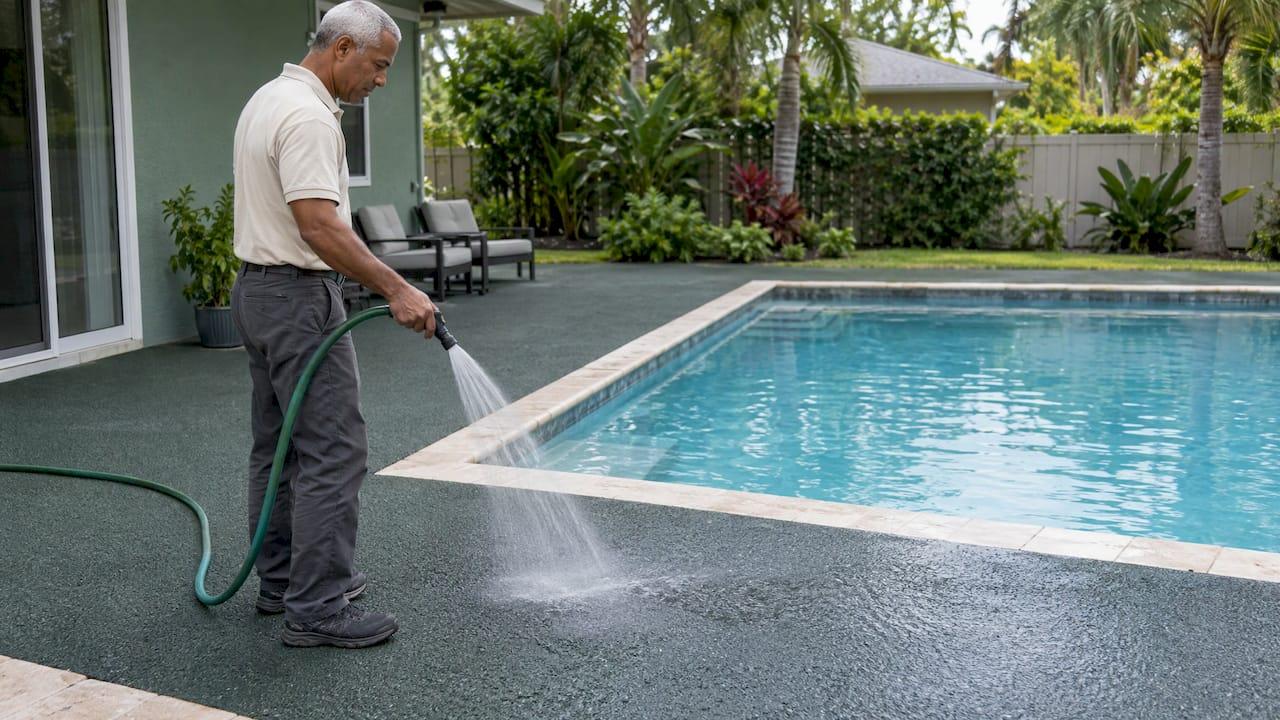
Rubber paving works well around pools, and ordinary splash water is not the concern. What decides how a rubber pool deck looks after ten summers is how you treat it: which cleaners touch it, how hot it gets, and whether water can drain through it. Concentrated chlorine bleach, solvents and acids are the products to keep off the surface. Light, regular rinsing and the right installation details cover the rest. If you run a home pool, an HOA clubhouse, a hotel deck or a municipal splash area, this guide covers what to know before you choose a surface and how to keep it looking right.
TL;DR
- Splash water from a pool is routine for rubber paving. Manufacturer specifications for a public pool project in Miami-Dade list concentrated chlorine bleach, acids, solvents, gasoline and oils as products to avoid on bonded rubber surfacing.
- Heat is the multiplier: lab work on EPDM rubber shows chlorine attack speeding up sharply at 50°C (122°F) in a strong bleach solution. A porous, well-drained surface and sensible color choice keep the deck out of that territory.
- Hot rubber that is hit by splashing water can leave a chalky mineral film. Rinsing and good drainage prevent it.
- For outdoor rubber, the binder and sealer matter: an aliphatic, ideally two-part product, is the one that guards against yellowing.
- Public and commercial walkways also need to meet ADA surface rules, which a properly specified rubber system can do.
Table of Contents
- What chlorine does to rubber, and what it does not
- Why heat matters more than the chlorine itself
- Does rubber paving get hot in the sun?
- Chemical-resistant pool deck: what to specify
- Algae and mold on walkways
- What this means for each reader
- ADA basics for rubber walkways around pools and parks
- Our approach to pool decks and wet areas
- Plan your rubber paving project
- FAQ
- Sources
What chlorine does to rubber, and what it does not
Pool water is a dilute solution. Concentrated products are a different matter. Granular shock, liquid sodium hypochlorite and cleaning bleach are far stronger than the water in the pool, and they are where damage to any rubber surface starts.
The clearest practical guidance comes from manufacturer specifications that Miami-Dade attached to a municipal pool project. They state that disinfectants, concentrated chlorine bleach, gasoline, diesel fuel, hydraulic and lubricating oils, acids and organic solvents may damage bonded rubber landscape surfacing and should be avoided. The same document notes that dissolved minerals and hydrochlorides from water-play areas and pool surrounds may cause surface discoloration.
Read that as a care list. It tells you what to keep off the deck:
- Spilled shock or liquid chlorine from the pool equipment area
- Bleach-based deck cleaners
- Acid washes used to clean pool tile or coping
- Fuel, oil and solvents from mowers, generators or pressure-washer pumps
The practical rule is simple. Keep chemical storage and mixing off the rubber, and rinse any spill with plenty of clean water right away.
Why heat matters more than the chlorine itself
Chlorine reacts faster the warmer it is. A peer-reviewed study of EPDM rubber, one of the rubbers used in recycled and granular surfacing, tested black-filled samples in a 500 ppm sodium hypochlorite solution at pH 10. At 277 to 303 K (roughly 4 to 30°C) the researchers found no significant chlorine or oxygen diffusion into the rubber. At 323 K (50°C, or 122°F), oxidative cleavage accelerated, chlorine and oxygen groups formed on the surface, and crosslink density fell.
Two things follow for a Florida pool deck.
- At normal water and air temperatures the rubber in that test was stable, even in a bleach solution much stronger than pool water.
- The risk grows when strong chemical and high surface heat coincide. A puddle of bleach on dark rubber at midday is the combination to avoid.
That is why heat management and chemical habits belong in the same conversation. Our rubber paving is built to handle Florida's heat and weather, and a porous design lets water move through the surface instead of sitting on it in the sun.
Does rubber paving get hot in the sun?
Any outdoor surface warms in Florida sun, and rubber is no exception. Color is the main lever. The HOA Support guide to resilient surfaces warns that dark rubber colors get hotter and deteriorate sooner. The same guide describes a second effect: when splashing water or vapors land on a hot rubber surface, they flash-evaporate and leave calcium and scale behind. The result is a chalky, cloudy look that takes acid washing followed by high-pressure washing to remove.
That gives you three practical choices for a pool deck:
- Pick color with heat in mind. We offer a wide range of colors, and lighter tones are a sensible choice around water. Our guides on light-colored rubber paving and on choosing colors with fade data in hand go through heat, fading and fit.
- Let water drain. A pervious system lets splash water pass through instead of sitting and evaporating on the surface, which is what leaves mineral film behind.
- Rinse after heavy pool use. A hose rinse on a hot afternoon removes the dissolved minerals before they bake on.
Chemical-resistant pool deck: what to specify
If you are comparing surfaces, the questions that matter are about the system, not just the rubber. Use this checklist when you ask for a quote or write a bid specification.
| What to ask about | Why it matters around a pool |
|---|---|
| Binder and sealer type | For outdoor rubber, HOA Support advises an aliphatic sealer or bonding glue, preferably two-part or with a hardening agent, to prevent discoloration and an "ambering" effect |
| Granule interlocking | Good interlocking helps prevent shrinkage, seam-splitting, delamination and edge curling, according to the same guide |
| Drainage | Porous construction keeps water from pooling and evaporating on hot rubber |
| Color | Lighter colors run cooler; dark colors get hotter and age sooner |
| Cleaning instructions | The surface should come with a clear list of products to use and avoid |
| Surface stability | Public paths need a firm, stable, slip-resistant surface under the ADA Standards |
The first two rows come from HOA Support's resilient surfaces guide. They are the details that separate a deck that stays even in color and tight at the seams from one that yellows or lifts at the edges.
Our Rubberway® system uses recycled tire materials in a porous design built for drainage and crack resistance. The product lines, including Pervious Pavement, Rubberrock 6000, EVOLUTION and the Sidewalk System, are on our products page. Because we specialize only in rubber paving, a pool deck project is planned around these questions from the start.
Algae and mold on walkways
In Florida, anything that stays damp and shaded can grow algae or mildew. That is true of concrete, pavers and rubber alike, and it is a question of moisture more than of material.
The prevention logic is the same everywhere: keep the surface clean, let it drain and dry, and cut down shade and debris where you can. Porous paving helps with the drying part, because water passes down through the surface instead of lying on top of it. It also means the pores must stay open. Leaves, sand and fine dirt can fill them over time, which is why routine cleaning matters. Our guide to cleaning rubber paving explains how vacuuming twice a year can prevent clogs.
A routine that suits most pool decks and walkways:
- Sweep or blow off debris weekly during leaf and pollen seasons.
- Rinse with clean water after heavy pool use and after any chemical splash.
- Vacuum on a schedule to keep pores open so drainage is not lost.
- Trim back overhanging branches that keep one stretch of path shaded and wet.
- Use mild cleaners only, and skip concentrated bleach, acids and solvents, for the reasons above.
Where you see a green film on a path in a shady corner, treat it early with gentle cleaning rather than waiting. Slippery algae is a safety matter on any walking surface, and a quick response keeps it from spreading.
What this means for each reader
Homeowners with a pool deck or patio
Your main decisions are color and sealing details, plus a few care habits. Choose a lighter shade, keep shock and bleach off the deck, and rinse after parties. Rubber stays softer underfoot than hard surfaces, which suits barefoot use around water.
HOAs and community pools
A shared deck sees more chemical handling, more foot traffic and more liability. Write the care rules into your pool operator's checklist: where chemicals are mixed, how spills are rinsed, and who owns the weekly debris sweep. Our offering for HOAs and community areas includes government-ready documentation, which is useful when a board needs paperwork for a vote or an insurer.

Municipalities and public pools
Public entities must also keep walking routes accessible over time. Under 28 CFR 35.133, as summarized in the FHWA's 2024 guide on maintaining active transportation infrastructure, accessible pedestrian routes have to be kept accessible through regular maintenance, with only isolated or temporary interruptions allowed. The guide also notes that rubber pavers can shift and create tripping hazards, so regular inspection is part of the job. Seams and edges are where inspection should focus.
Golf courses and commercial properties
Cart paths, clubhouse patios and pool terraces see fuel, fertilizer and maintenance chemicals as well as pool products. Set a rule that equipment is fueled and washed off the rubber, and that spills are rinsed at once.
ADA basics for rubber walkways around pools and parks
Pool surrounds and park paths are often accessible routes, so surface rules apply. A summary of the ADA Standards from Romex (March 2025) is not needed here; the FHWA guide above and the county plan below carry the specifics. The key numbers are:
- Surfaces must be stable, firm and slip-resistant.
- Running slope on a walking route should not exceed 1:20.
- Vertical changes should not exceed 1/4 inch without bevel treatment.
- Ramps in Olmsted County's 2026 ADA plan are measured against a running slope of 8.33% or less, a cross slope of 2% or less, a landing of at least 4 by 4 feet and truncated-dome detectable warnings.
For more detail, see our guides to how rubber paving meets ADA standards, ADA-compliant walkways and inspections and detectable warning requirements. No new federal rule changes appeared in the 2024 to 2026 documents we reviewed, so the existing ADA Standards remain the reference.
Our approach to pool decks and wet areas
Here is how we think about rubber paving where water is part of daily life.
Most surface problems around pools come from three causes: standing water, heat and the wrong product in the wrong place. Rubberway® is a porous system, so water has somewhere to go. It is made with recycled tire materials, it resists cracking in heat and weather, and it comes in a wide range of colors, which lets you choose a lighter tone for a sunny deck.
We only install rubber paving. We are licensed and insured, and we provide the documentation boards and municipalities ask for. That focus means a pool deck, a splash area or a park trail is planned around drainage, color and ADA requirements from the first walk-through.
Our advice to owners is short: keep concentrated chemicals off the surface, rinse after heavy use, vacuum on schedule and choose color with Florida sun in mind. Do that and a rubber deck stays comfortable underfoot for years.
Roger
Plan your rubber paving project
If you are renovating a pool deck, a community walkway or a municipal path in Florida, we install Rubberway® systems for homeowners, businesses, HOAs and municipalities. Our professional rubber paving installation covers residential driveways, pool decks and patios, commercial walkways, parks, trails and sidewalks. Tell us the site, how much shade and sun it gets and who uses it, and we will recommend the system and color that fit.
You can also look through the Rubberway® product lines before you call.
FAQ
Is rubber paving safe around chlorinated pool water?
Yes, normal splash water from a pool is part of everyday use on a rubber pool deck. The products to keep off the surface are concentrated chlorine bleach, acids, solvents, fuel and oils, which a Miami-Dade project specification lists as materials that may damage bonded rubber surfacing. Rinse any spill with clean water right away.
Why does my rubber deck look chalky or cloudy?
This is usually mineral residue. When splashing water hits a hot rubber surface it evaporates fast and leaves calcium and scale behind. Regular rinsing and good drainage help prevent it. Established film can need an acid wash followed by high-pressure washing, so ask us before treating it.
Does rubber paving get hot in the sun?
It warms in direct sun like any outdoor surface, and dark colors get hotter and age sooner. Choosing a lighter color is the simplest fix for a sunny pool deck. Rinsing with water on very hot afternoons also helps.
How do I keep algae off a rubber walkway?
Keep the surface clean, drained and as dry as possible. Sweep debris, trim branches that shade the path, and vacuum the surface on a schedule so the pores stay open. Treat any green film early with mild cleaning rather than strong bleach.
Sources
- Manufacturer specifications, Curtis Park Pool (Miami-Dade)
- Studies on the Degradation of EPDMs by Hypochlorous Acid (J-STAGE)
- Resilient Surfaces guide (HOA Support)
- Guide for Maintaining Active Transportation Infrastructure, FHWA-SA-23-005
- 2026 Olmsted County ADA Plan